+
Geo-Fencing Advertising

Advertise to the people standing in your competitor's store.
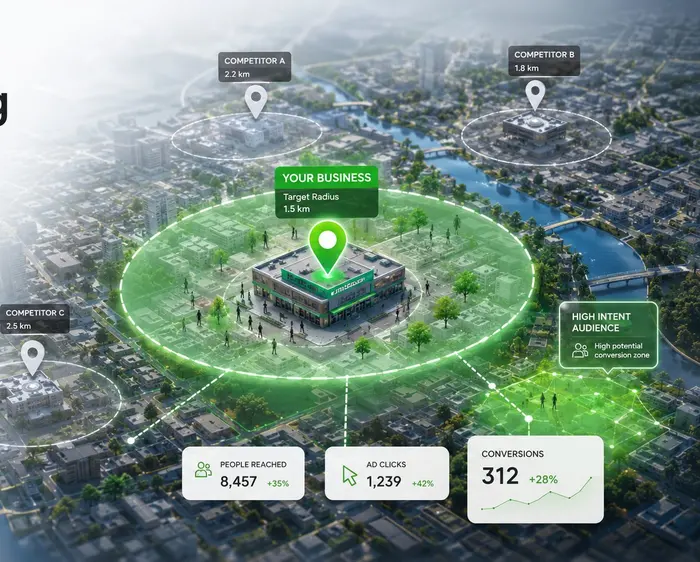
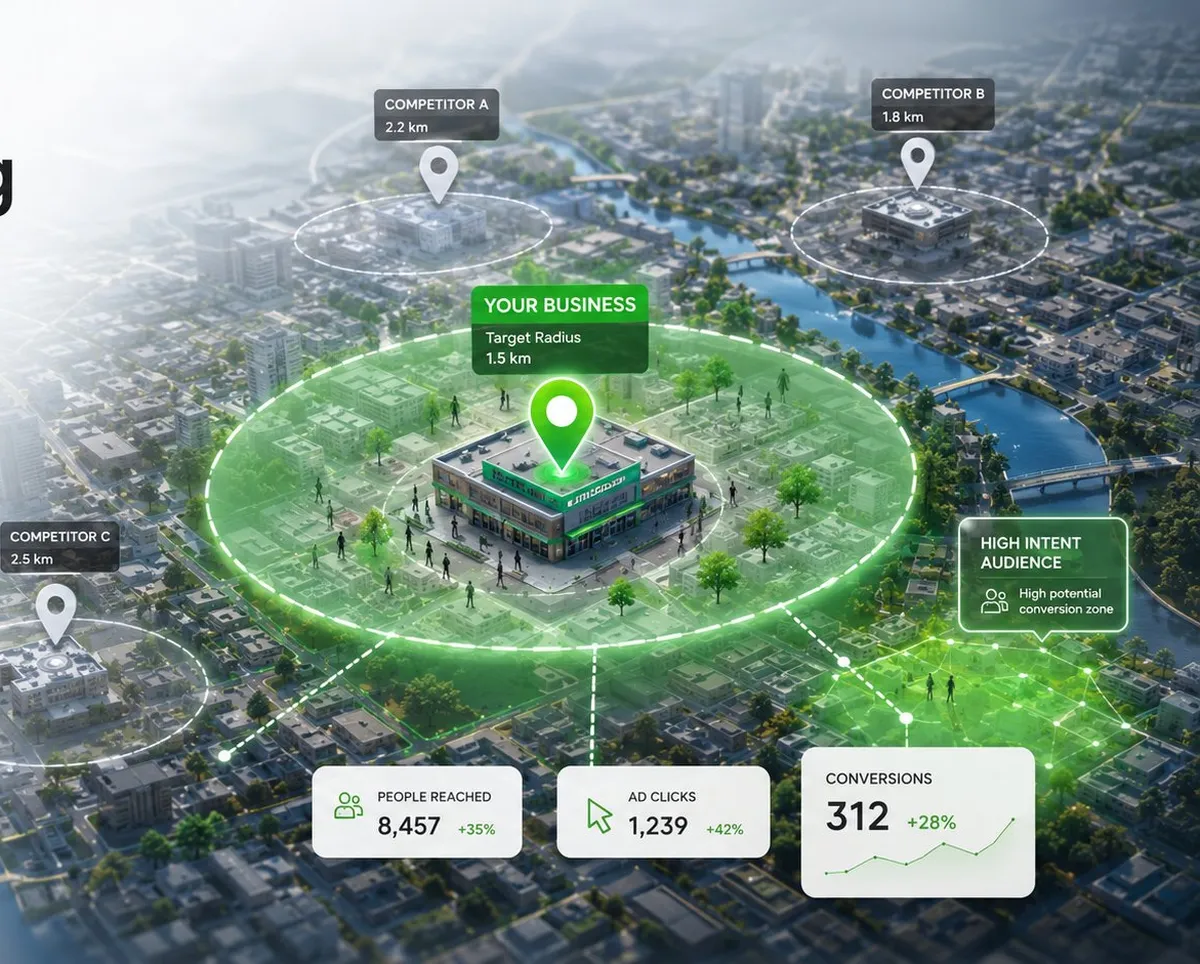
Geo-fencing draws an invisible boundary — down to 100 meters — around any physical location: a competitor's lot, a trade show, a hospital, a neighborhood. Everyone who walks in becomes your audience. Their phones see your ads for the next 30 days. Most businesses have never heard of this technology. We've been deploying it for years — and your competitors' customers are the most qualified audience you'll ever buy.
100m
Targeting precision
30 days
Audience retention window
Foot-traffic
Attribution included
Free · No obligation
Get your free audit
We review your ads, SEO & competitors — and come back within 24 hours with a plan.

Response within 24 hours · Money-back guarantee

How geo-fencing works

Four steps from their parking lot
to your pipeline.

01
Draw the fence
We map virtual boundaries around the locations that matter — competitor stores, event venues, neighborhoods, complementary businesses. Each fence is drawn to capture real visitors and exclude drive-by noise.
02
Capture the audience
When a device enters the fence, it joins your audience — anonymously, through consented location data. The person who just spent 40 minutes at your competitor's showroom is now reachable.
03
Serve the ads
For up to 30 days, that audience sees your display and video ads across the apps and websites they already use. Your offer follows them — politely, persistently, measurably.
04
Measure foot traffic
Conversion-zone tracking measures how many people who saw your ads physically walked into your location. Not clicks — actual visits. That's the number we optimize.
Why it's an unfair advantage

The most qualified audience
in advertising is already shopping.

Every other ad channel makes you guess about intent. Search ads catch people typing keywords. Social ads infer interest from behavior. Geo-fencing removes the guessing entirely: a person physically standing inside a competitor's business is, by definition, an active shopper in your category, right now.

A family walking a competitor's dealership lot this Saturday is buying a car this month. A homeowner inside a flooring showroom has a flooring project. A patient at an urgent care could have chosen yours. These people aren't researching someday — they're deciding now, and geo-fencing is the only technology that lets you raise your hand in that moment.

What makes it genuinely unfair: almost nobody uses it. National brands quietly deploy geo-fencing through programmatic platforms most local businesses have never seen. When we bring it to a local or regional client, they're frequently the only company in their market doing it. That window won't last forever. It's open now.

Fences our clients run
Competitor dealership lots — shoppers comparing inventory see your offer before they decide
Trade shows & conferences — every attendee becomes a 30-day B2B audience
Hospitals & medical centers — practices reach patients near the point of care decision
Retail districts & malls — active shoppers within driving distance of your store
New-construction neighborhoods — home services reach owners exactly when projects begin
What's included

Full-service geo-fencing,
fence to foot traffic.

Location strategy — identifying the competitor sites, venues, and zones worth fencing
Fence design drawn to capture genuine visitors and exclude pass-by traffic
Audience building with 30-day retention windows through compliant data platforms
Display and video creative production matched to your brand
Conversion-zone setup at your locations for foot-traffic attribution
Frequency management — present without being creepy
Landing pages or offers designed for the geo-fenced audience specifically
Cross-channel coordination with your search and social campaigns
Weekly manual review — fences, creative, and budget tuned by the same specialist
Plain-English reporting: impressions, clicks, and physical visits attributed
Event-mode campaigns — short, intense fencing around trade shows and seasonal moments
Honest scoping — if your market or category doesn't suit geo-fencing, we say so
FAQ

Common questions, straight answers.

What exactly is geo-fencing advertising?
Geo-fencing draws a virtual boundary — as tight as 100 meters — around a physical location: a competitor's store, a trade show, a hospital, a neighborhood. When someone's phone enters that boundary, they're added to an audience that then sees your display and video ads in the apps and websites they use. You're advertising to people based on where they physically went.
Is geo-fencing advertising legal?
Yes. Geo-fencing uses location data that users consent to share through their apps, processed in anonymized, aggregated form by licensed data providers. No personal identity is exposed to the advertiser. It's the same data ecosystem powering most mobile advertising — applied with geographic precision. We work only with compliant, reputable demand-side platforms.
How precise is the targeting, really?
Down to roughly 100 meters in practice — precise enough to fence a single business location, a dealership lot, or a conference hall without bleeding into the surrounding area. Indoor precision varies with GPS conditions, which is why fence design matters: we draw boundaries that capture genuine visitors and exclude pass-by traffic like adjacent highways.
What does geo-fencing advertising cost?
Programmatic geo-fencing campaigns typically start around $1,000 to $1,500/month in media spend for a local market, scaling with the number of fenced locations and audience size. Management is included in our custom partnerships and quoted by scope. It's one of the most affordable ways to put your brand in front of a competitor's customers.
How do you measure whether geo-fencing actually works?
Three layers: click and conversion tracking on the ads themselves, foot-traffic attribution — measuring how many people who saw your ad later physically visited your location — and plain-English reporting on cost per visit. Foot-traffic conversion is the metric that matters for brick-and-mortar businesses, and it's measurable with this technology.
Which businesses benefit most from geo-fencing?
Any business whose customers visit physical locations: auto dealerships fencing competitor lots, medical practices fencing hospitals, restaurants fencing entertainment districts, retailers fencing malls, home-service companies fencing supply stores, and B2B companies fencing trade shows. If your competitor has a parking lot, you have a use case.
Keep exploring

Related services.

Get started today

Ready to fence your competitors?

Get a free geo-fencing assessment — which locations to fence in your market, realistic budget, and expected foot traffic. Response within 24 hours.

Claim your free audit → Or book a 30-min call →

Free · No credit card · Money-back guarantee for new clients

Free audit · 24-hour turnaround · Money-back guarantee
Free Audit →